Skip to content

There is usually a list: the medication that helped for six weeks, the injection that did nothing, the physical therapy that made mornings tolerable and left the evenings unchanged. Pain lasting years leaves a record like that, along with real doubt about the next option offered.
Ketamine for Chronic Pain has entered that conversation over the past decade, and it works on a different part of the problem than most pain medications do. Not the injured tissue. It targets the signaling system that keeps reporting damage long after the tissue has calmed down.
Does ketamine actually work for long-term pain conditions?
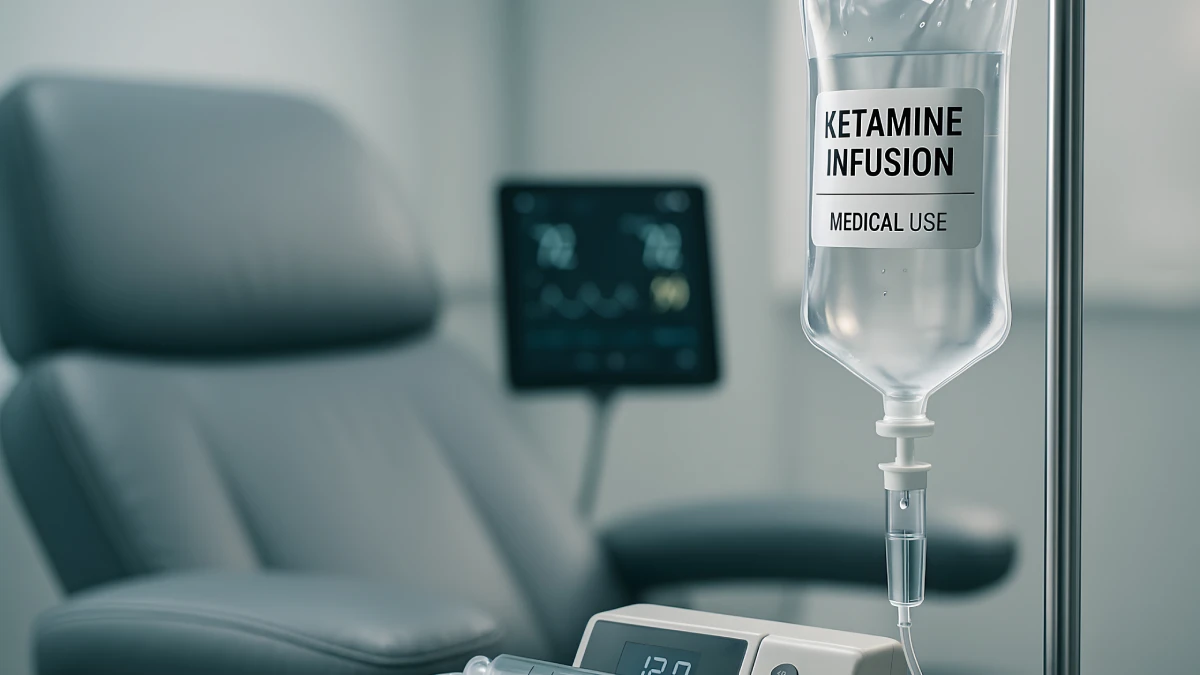
Ketamine is delivered by intravenous infusion under medical supervision and acts on NMDA receptors in the brain and spinal cord, which can quiet the amplified pain signaling seen in people whose nervous systems have become oversensitive. Research support is strongest in CRPS, also called complex regional pain syndrome, and more limited elsewhere, and because this use is off-label, a medical evaluation determines suitability first.
Why Chronic Pain Becomes Harder to Treat Over Time
Long-standing pain often changes character, shifting from a tissue problem into a nervous system problem. Clinicians call this central sensitization: the spinal cord and brain turn up the volume on pain signals and keep it there, so ordinary sensations register as painful and painful ones feel worse.
That shift explains a frustrating pattern. Anti-inflammatories, steroid injections, and treatments aimed at one joint or nerve are built to quiet an irritated site. When the amplification lives in the nervous system, those tools do less than they once did.
How Ketamine Approaches Pain Differently
Ketamine blocks NMDA receptors, docking points in the nervous system that lock amplified pain signaling into place. Blocking them briefly appears to interrupt that pattern, which is why ketamine is described as acting on pain processing rather than the painful area itself.
Two points matter for anyone who has managed pain for years. Ketamine is not an opioid and does not act on opioid receptors, so it sits apart from the medications most pain patients know. It has also been FDA-approved as an anesthetic for decades, which is where its safety record in monitored settings comes from.
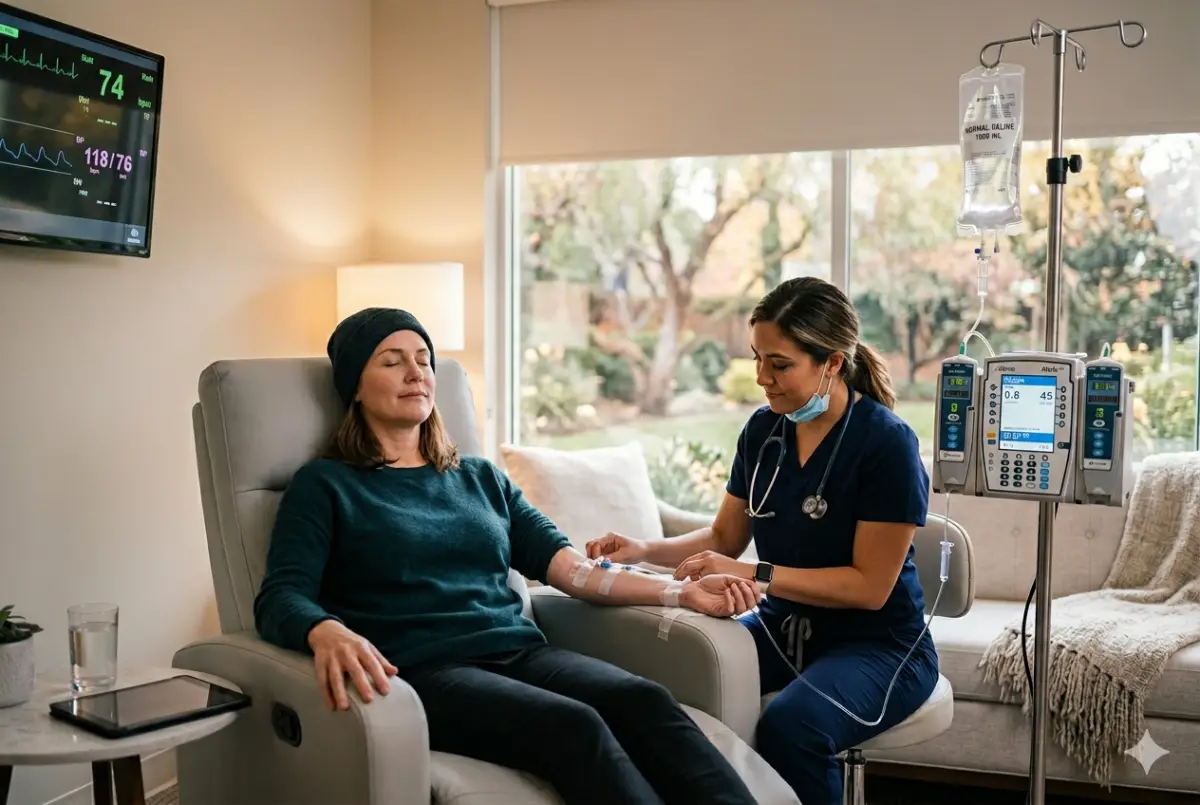
A ketamine infusion for pain is given intravenously at a low, controlled rate. At Revive Ketamine Centers, infusions are paired with magnesium, which works alongside ketamine at the same receptor system, and our team monitors each session.
Which Chronic Pain Conditions Ketamine May Help, and How Strong the Evidence Is
The evidence is uneven, and honesty serves better than enthusiasm. Consensus guidelines from the American Society of Regional Anesthesia and Pain Medicine, the American Academy of Pain Medicine, and the American Society of Anesthesiologists graded it condition by condition.
Complex regional pain syndrome, or CRPS, has moderate evidence behind it, with improvement reported up to roughly 12 weeks. Pain after spinal cord injury has weak evidence. Fibromyalgia, mixed neuropathic pain, phantom limb pain, and postherpetic neuralgia, the nerve pain that lingers after shingles, showed weak or absent evidence for lasting improvement.
Weaker evidence doesn’t close the door, but it should shape expectations. A patient with CRPS starts from stronger research footing than one with fibromyalgia, though we treat both. Your provider reviews your diagnosis and history to decide whether a trial is reasonable.
What Off-Label Treatment Means for You as a Patient
Ketamine therapy for chronic pain is off-label, and that term deserves a plain explanation. Off-label prescribing means a physician uses an FDA-approved medication for a purpose the FDA has not formally reviewed. It is legal, common, and different from experimental treatment.
The status is specific. Ketamine is FDA-approved for anesthesia, and esketamine, a related nasal spray, is FDA-approved for treatment-resistant depression. No form of ketamine carries FDA approval for chronic pain. CRPS received orphan drug designation, a research incentive for rare conditions, which is not approval.
Who Is a Good Candidate, and Who Should Wait or Avoid It
Good candidates usually have a diagnosed chronic pain condition that has not responded well to conventional care and remain under a treating physician. Infusions are added to a pain management plan, not substituted for one.
Some conditions call for caution or rule out treatment entirely, including:
- Pregnancy
- Active psychosis
- Poorly controlled cardiovascular disease
- Significant liver disease
- Raised pressure inside the skull or the eye
- Active substance use
Evaluation covers your medical history, every medication and supplement you take, and a baseline blood pressure reading, since ketamine can raise blood pressure and heart rate during an infusion. If you are unsure where you fall, our team can review your history.
What to Expect Before, During, and After an Infusion
Preparation is simple: avoid food for four hours and fluids for two hours beforehand, and arrange a ride home, since you may not be able to drive afterward.
Most patients feel relaxed during the session and notice mild dissociation, a floating or detached sensation that usually fades shortly after the infusion ends. Side effects can include temporary increases in blood pressure or heart rate, nausea, and visual disturbances, all of which we monitor throughout.
One infusion rarely tells the whole story. Relief builds across a series, and boosters are often used to maintain it. Anyone considering Ketamine for Chronic Pain in Buford, GA should know which conditions we treat and how a series is structured
Where Ketamine Fits in Your Pain Plan
Ketamine is worth discussing for certain chronic pain conditions, particularly CRPS, where the research is strongest and standard chronic pain treatment has fallen short. It acts on nervous system signaling rather than the original injury; it is used off-label under medical supervision, and it works best as part of a broader plan. Honest framing is part of good ketamine pain management, and any provider should tell you what the evidence does and does not show.
Writing down your diagnosis, the treatments you have already tried and how each one went, and your current medications gives a provider what they need to tell you honestly whether an infusion series fits your situation. Learn whether ketamine therapy may be right for your chronic pain. Contact Revive Ketamine Centers to schedule a consultation today.